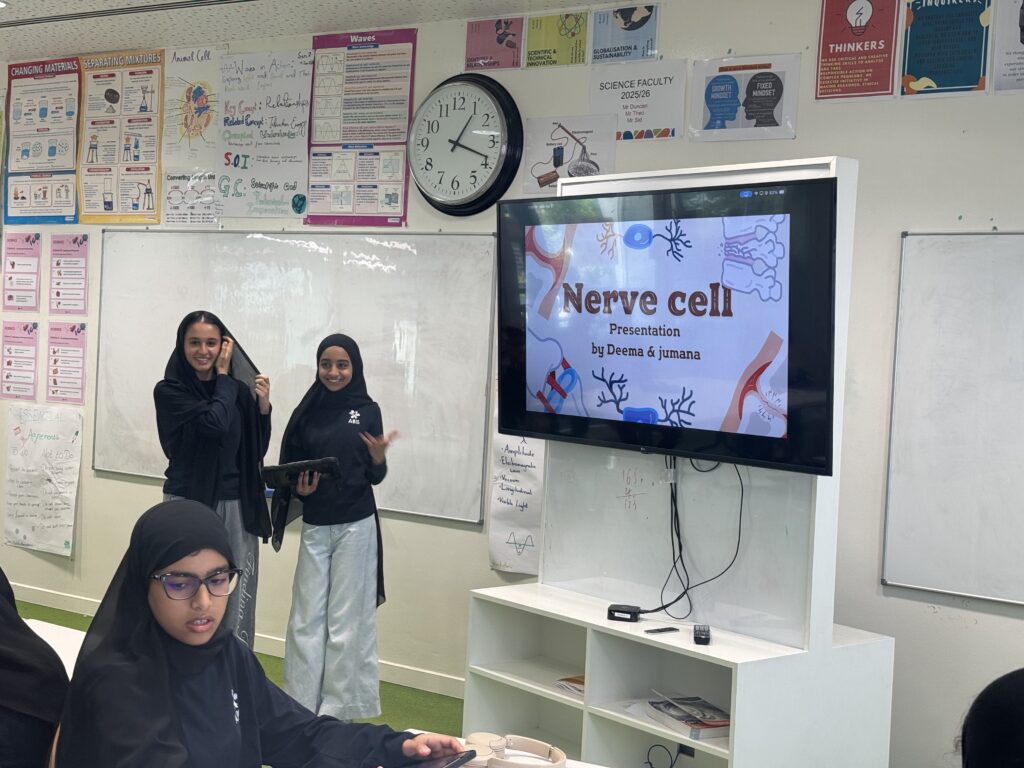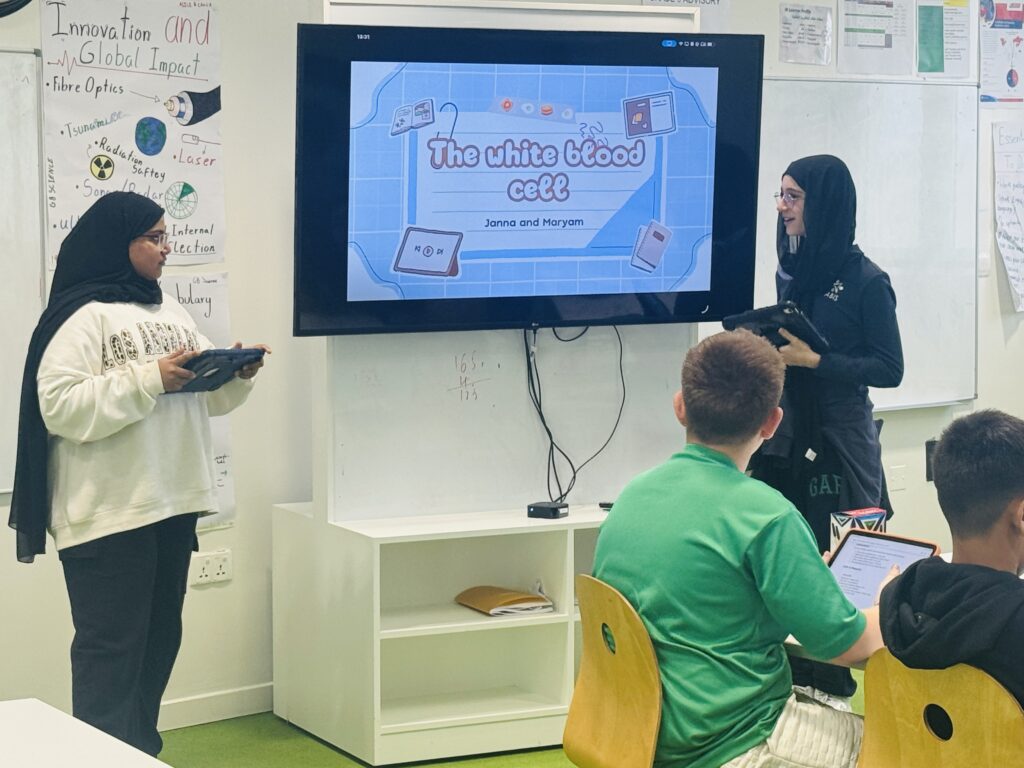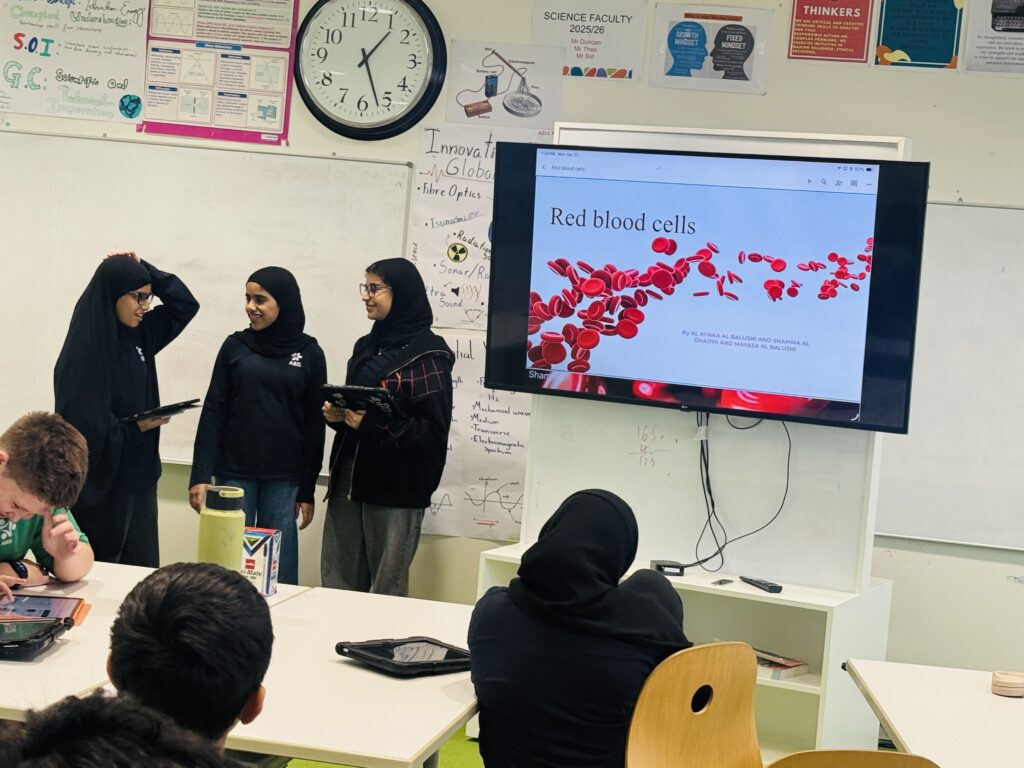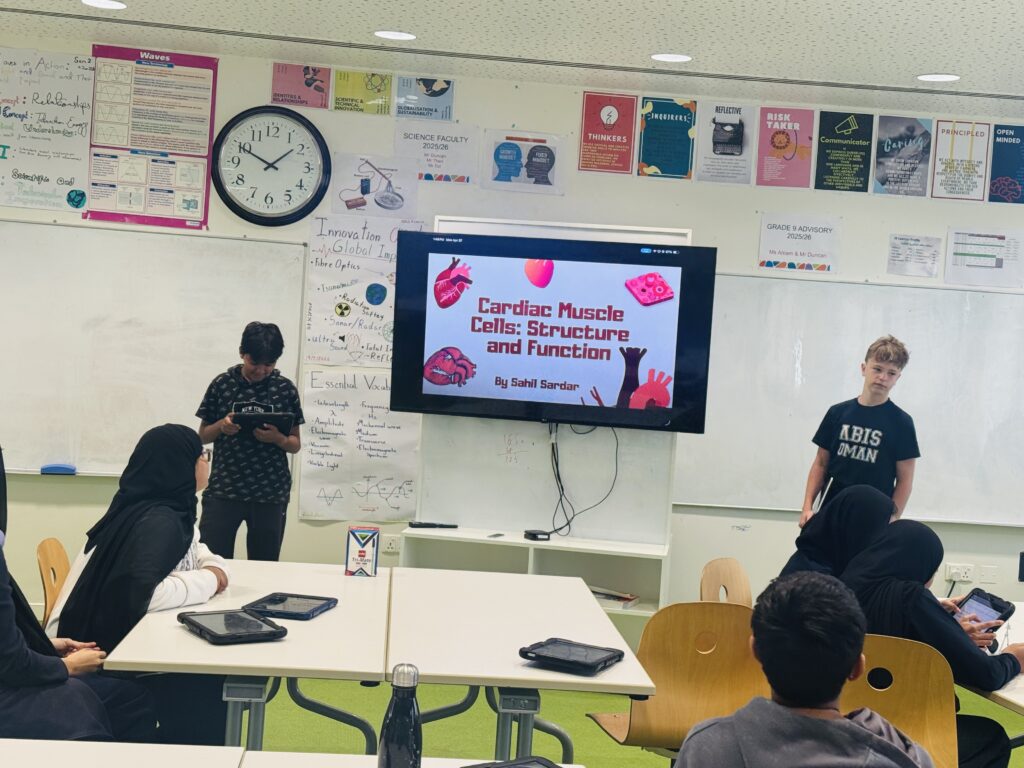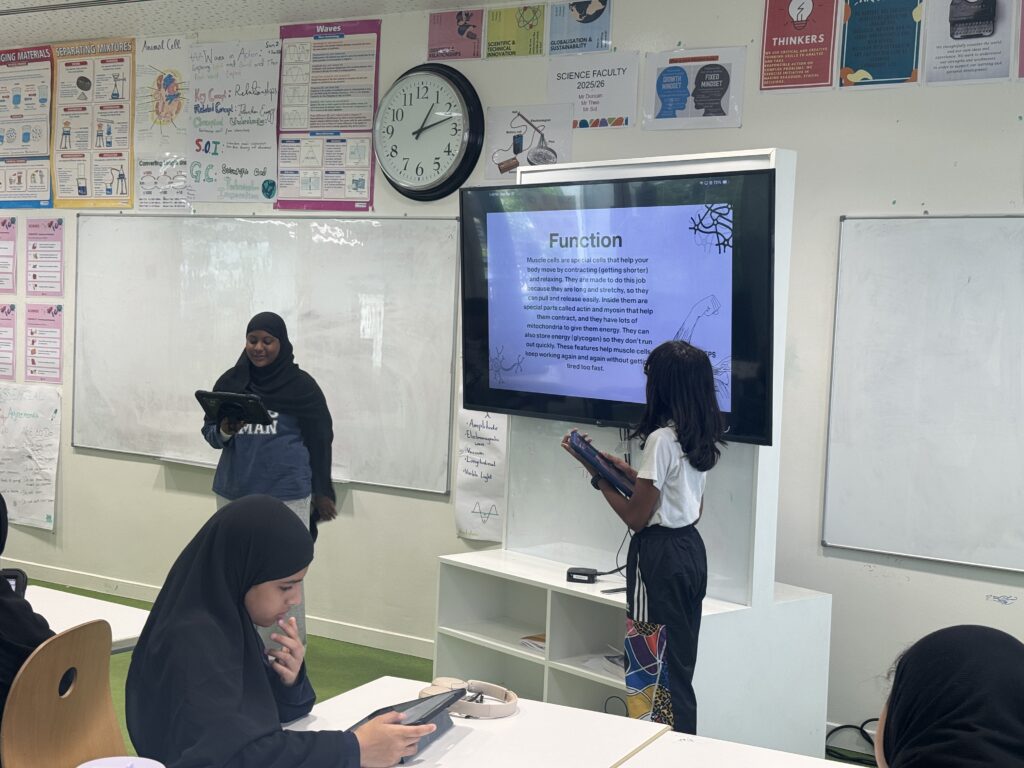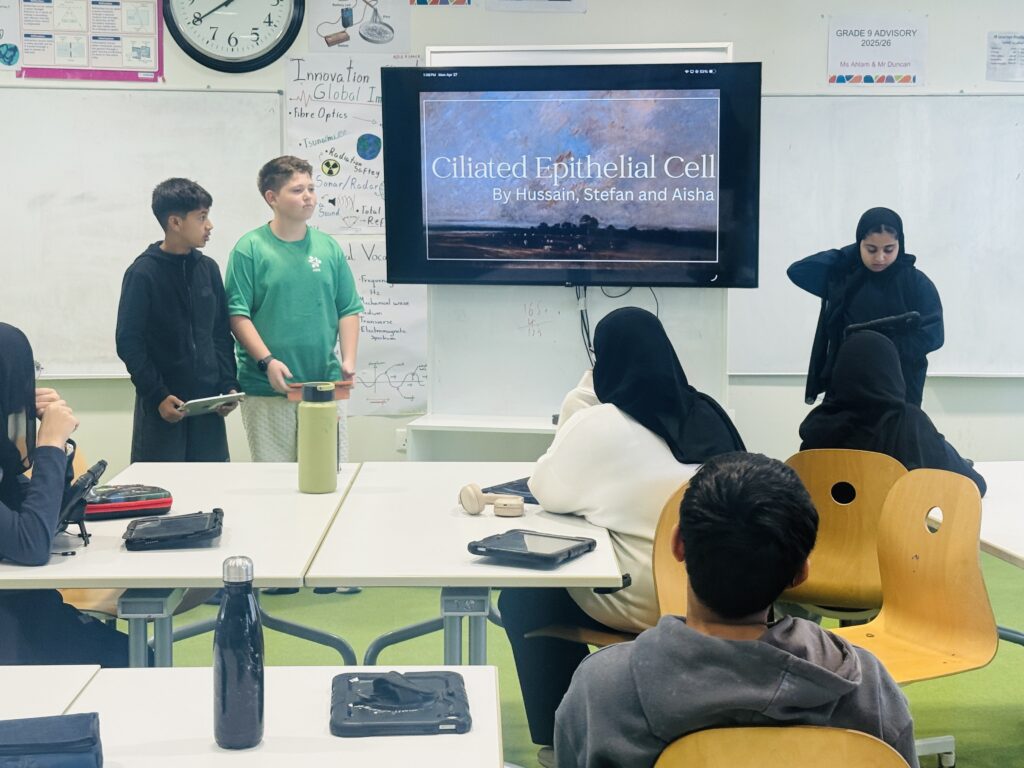
Over the past six weeks in Grade 7 Science, students have been building a strong foundation in cell biology through the key idea that systems interact to enable life’s functions. They have explored what makes something “living” by learning the characteristics of life and how organisms are structured from cells → tissues → organs → systems. Students now understand that the cell is the basic unit of life and have examined its main parts—nucleus, cytoplasm, and cell membrane—and their roles. Through practical work, including using microscopes to observe onion cells, they have developed essential lab skills and connected theory to real observation. They have also compared plant and animal cells, explored cell organelles and their functions, and investigated specialized cells (muscle, nerve, red blood, palisade, and root hair cells) to understand how structure supports function in living systems.
Students will complete their Criterion A (Knowing and Understanding) summative assessment on Monday, 4th May, with feedback provided within the week. Looking ahead, we will begin exploring how science applies to real-world contexts by examining uncontrolled cell division and its link to cancer, including how scientific understanding informs identity and treatment. This will also serve as an introduction to cell division, which students will study in more depth in Grade 8.