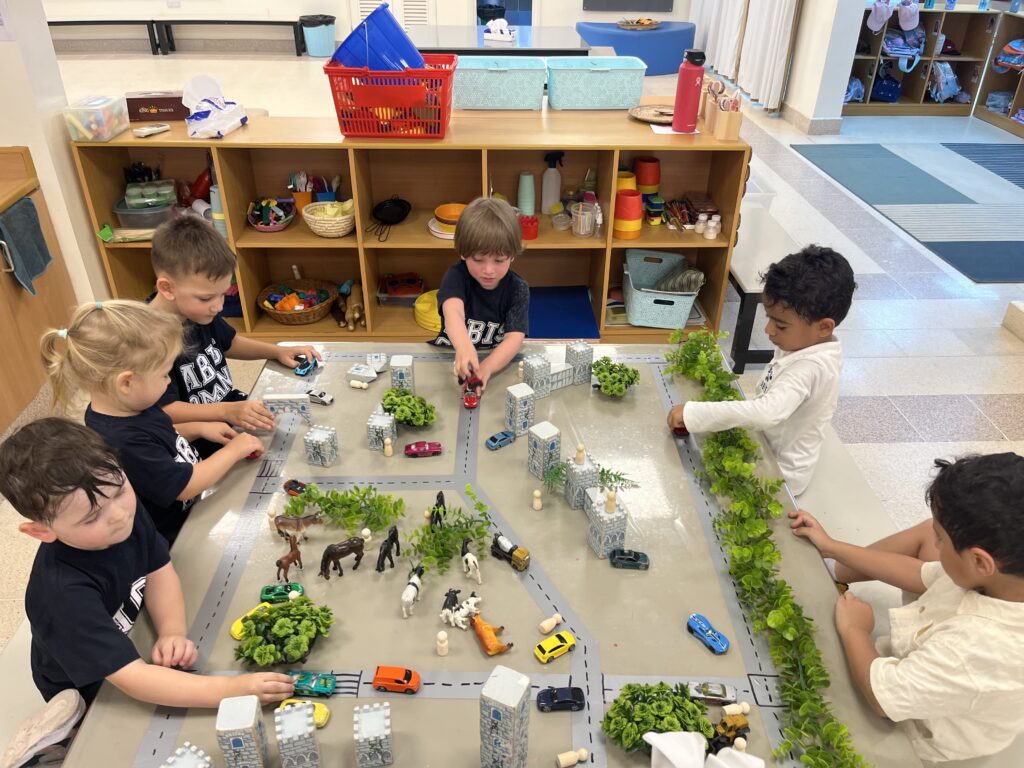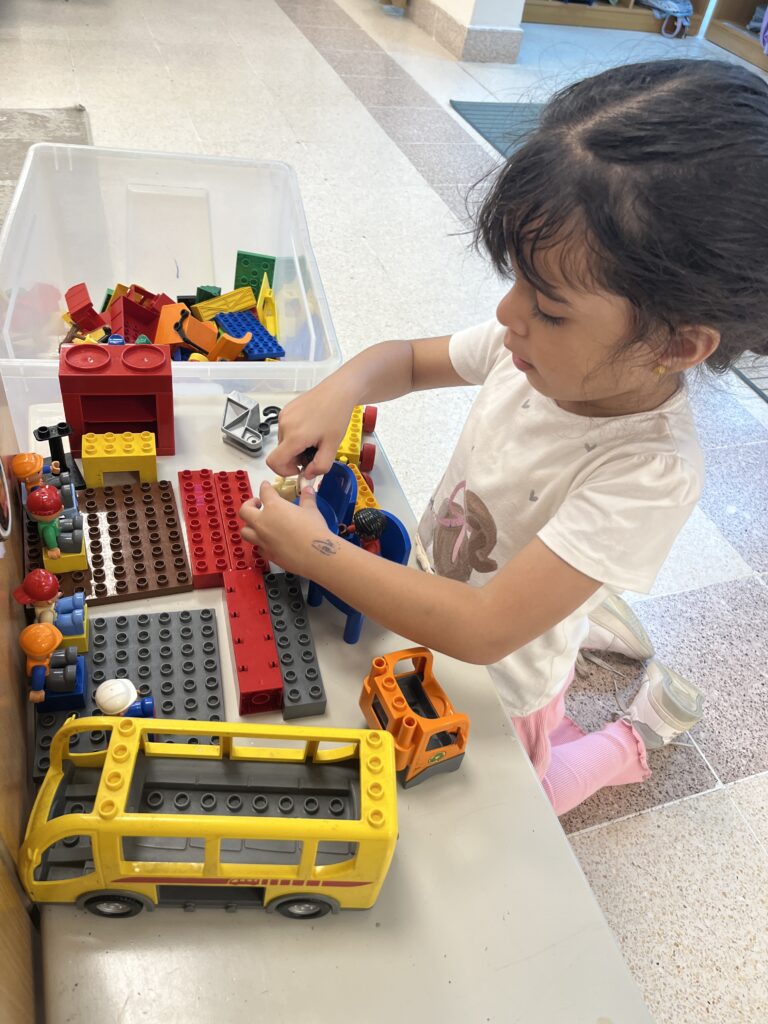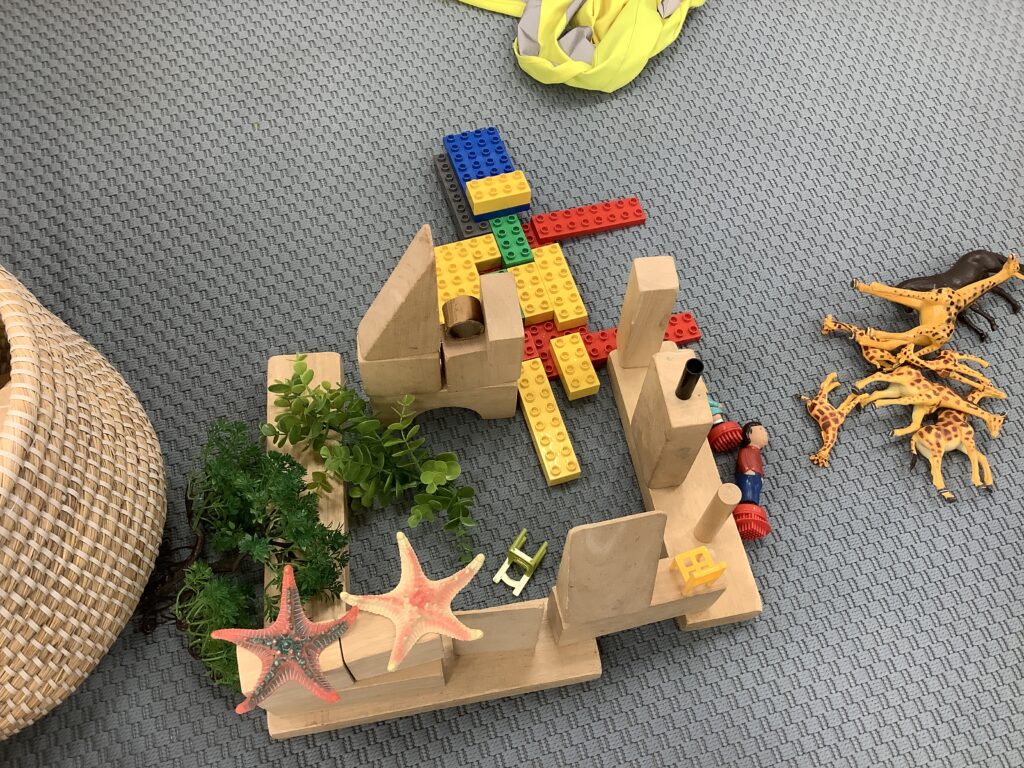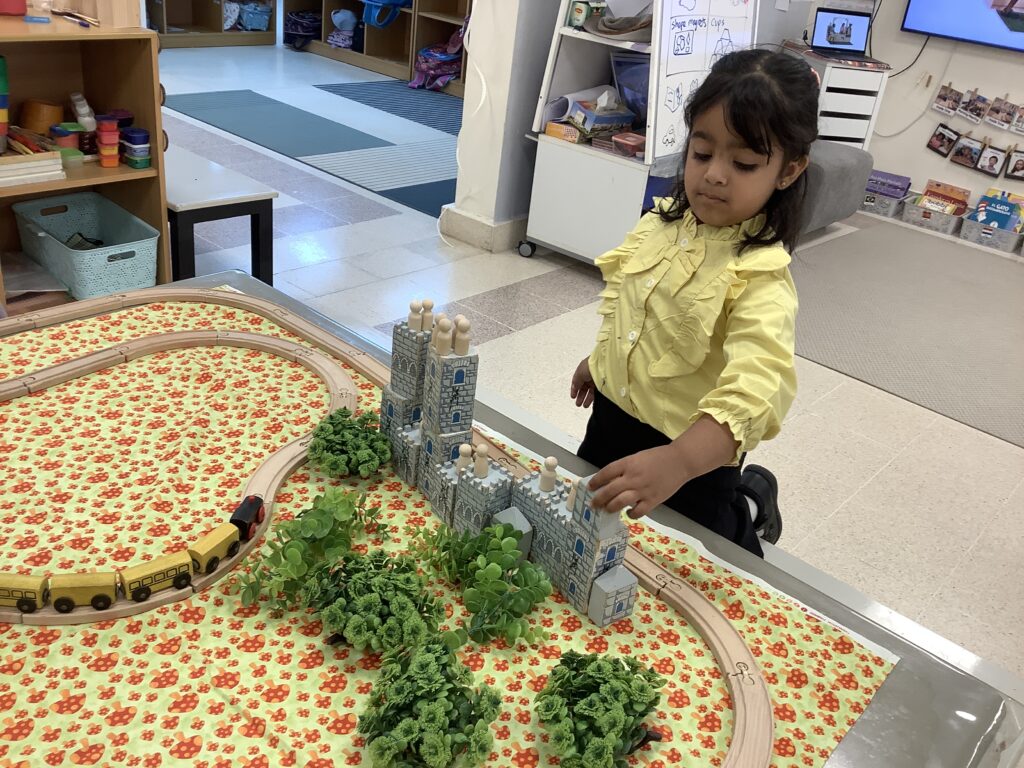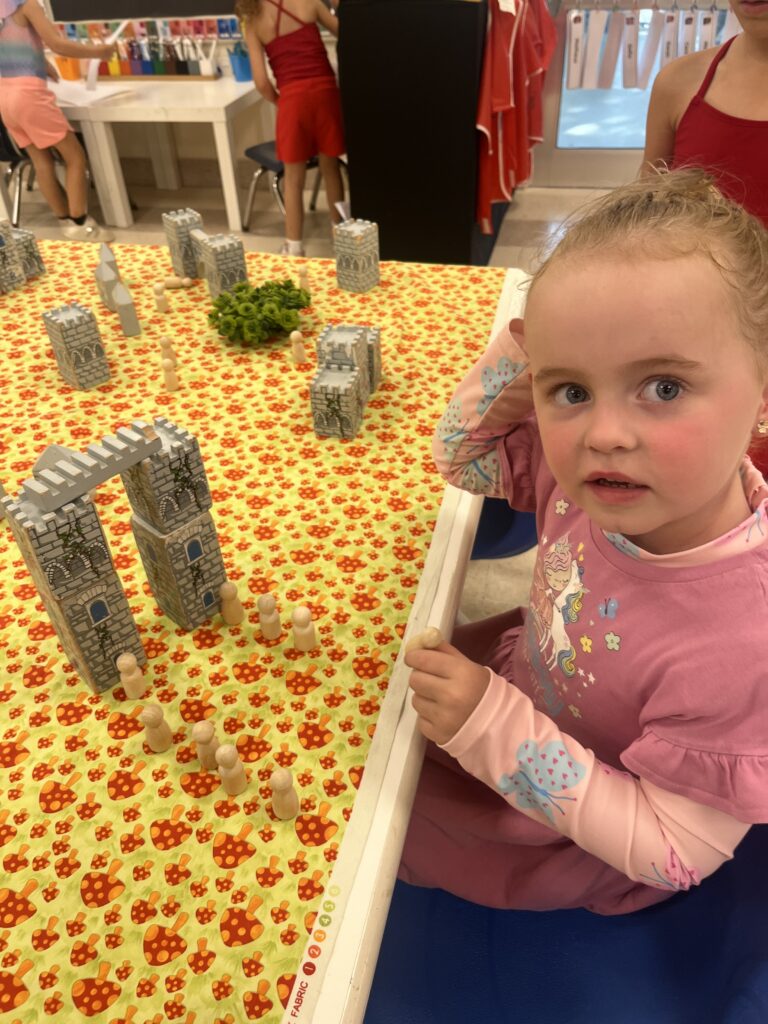
One important facet of exploration, play and learning in early childhood is what is often called ‘small world play’. Small world play is the use of miniature figures, objects and environments to represent real or imagined worlds and experiences. It allows children to create, explore and recreate different situations through imaginative play using small-scale resources and materials. It allows for open-ended exploration, creativity and storytelling and can encompass many different scenes and ideas depending on children’s interests and experiences.
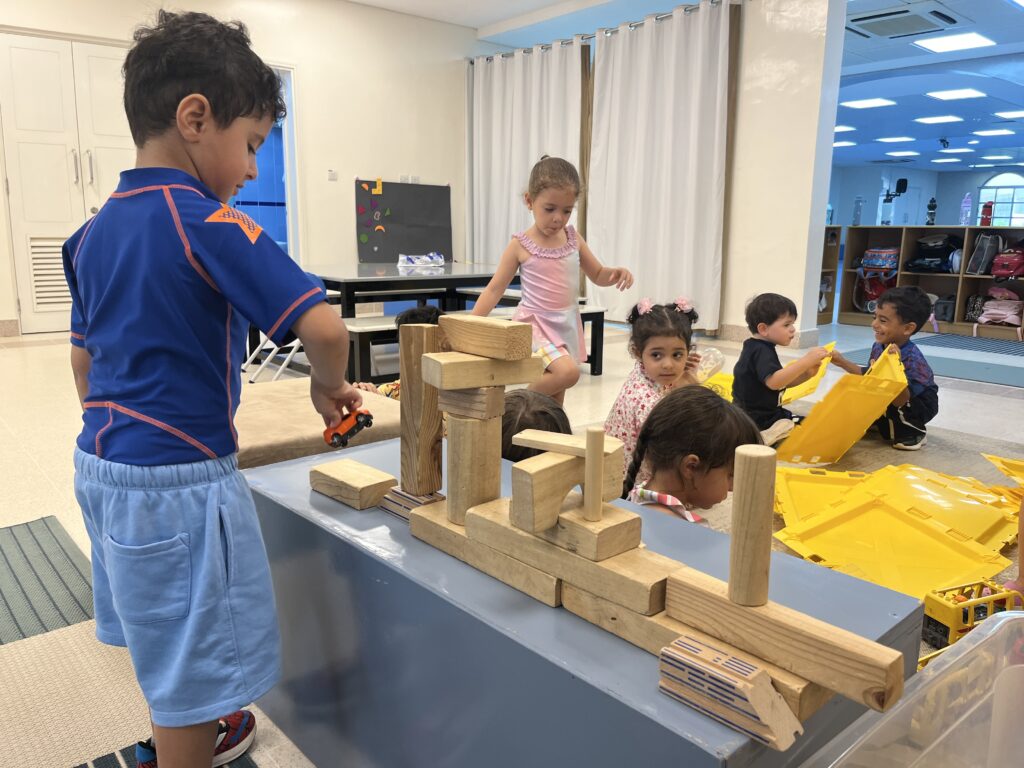
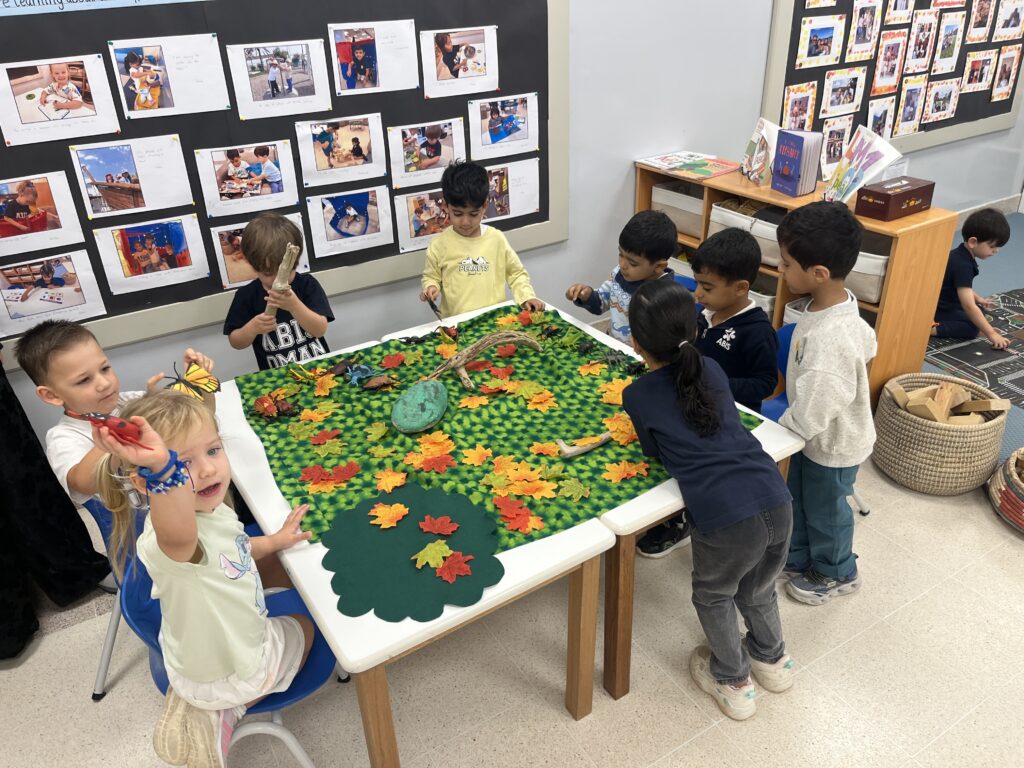
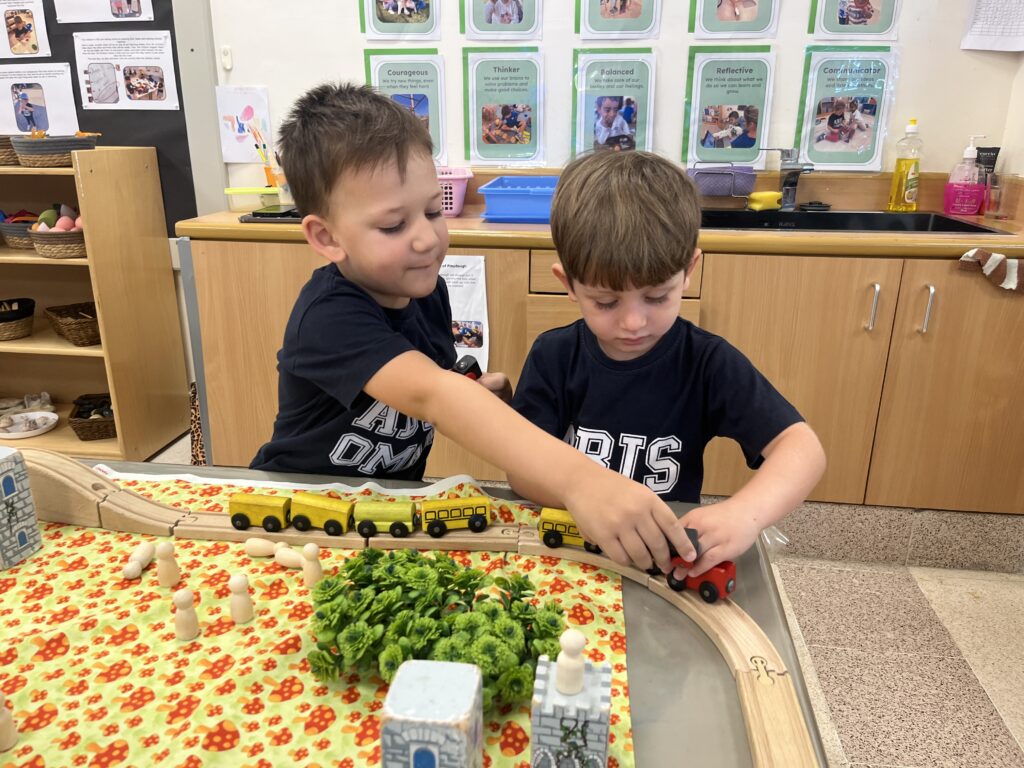
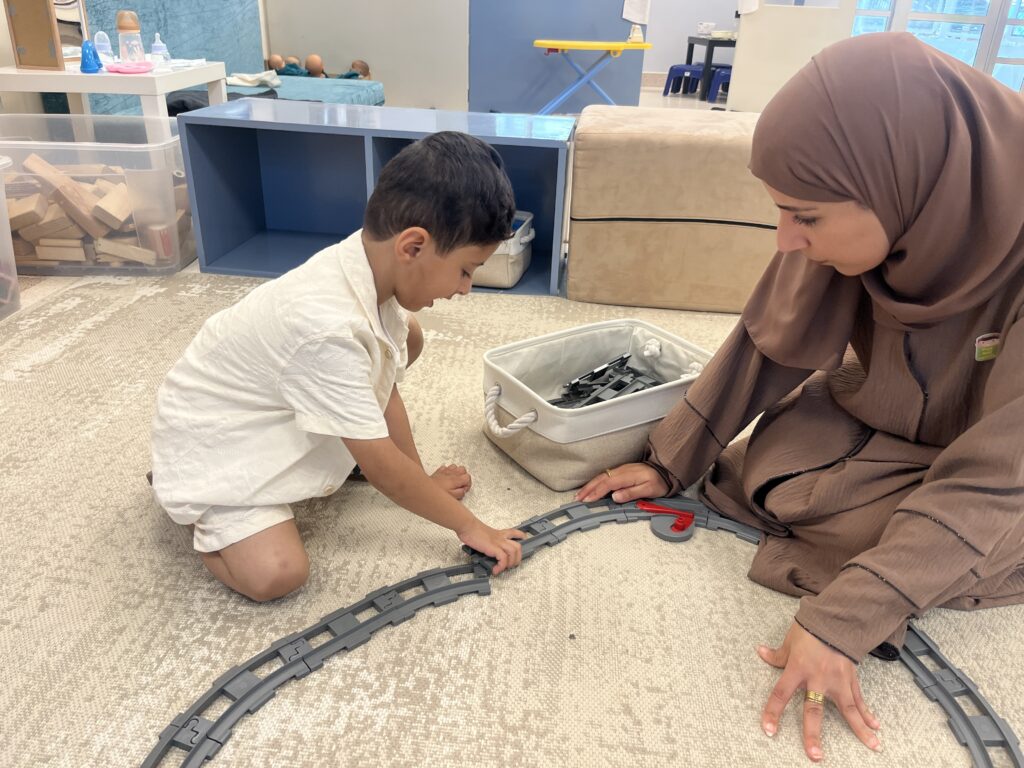
We often set up specific small world play areas for children to engage with if they choose, for example a dinosaur ‘world’ or an insect world. Small towns including cars or trains, along with people, houses and trees, or a doll’s house with furniture and people would be other examples we set up, along with a variety of props and resources to help engage children’s imagination. Children also often build and develop their own small-world play setups, as you will no doubt have seen. When they build with construction sets such as wooden blocks or magnetic tiles and then add toy people or animals to the mix before developing a narrative, they are combining construction, creativity and imaginative thinking together in meaningful ways.
While engaging in small world play, children often explore ideas, act out experiences and develop stories based on their own understanding of the world around them. They may recreate familiar events such as going shopping, visiting the doctor or travelling, or invent completely imaginative scenarios involving animals, superheroes or fantasy characters. Children frequently play alongside others, sharing ideas and negotiating roles, while at other times they may become deeply engaged in independent play, concentrating for extended periods as they organise and develop their ideas.
Small world play supports many important areas of learning and development for young children. Through this type of play, children are developing language and communication skills as they describe their ideas, tell stories and engage in conversations with others. They are strengthening social skills such as sharing, cooperation and turn-taking as they play collaboratively. Children also develop their creativity and imagination as they invent characters, settings and narratives. In addition, small world play encourages problem-solving and critical thinking as children plan, build and adapt their play environments. Fine motor skills are supported as children manipulate small figures, arrange objects and construct detailed setups. Early mathematical understanding may also develop as children sort, group, compare sizes, create patterns or explore positional language such as “next to”, “behind” and “under”. Most importantly, small world play allows children to make sense of their experiences, express ideas and emotions and engage in joyful, meaningful learning through play.